
My family survived the 1997 El Niño thanks to my dad’s amateur forecasting skills.
I must have been far too young to comprehend weather patterns when, one evening, it suddenly started raining cats and dogs. The downpour continued, and soon the river we lived next to began to swell, creeping closer towards our home. It almost seemed as though the river was inviting us to explore the adventure that lay in its silt-filled waters.
It sneakily crept up the footpaths with the same innocence as the rainwater puddles my younger siblings loved hopping into. So, we didn’t make much fuss about it. In fact, we dismissed it, since this was a normal occurrence. Instead, we kept warm in our home with a cup of black tea as our parents told stories about how they had survived their childhood, our main source of entertainment before television took over.
The downpour stopped unexpectedly, allowing my dad to open the door to peep outside. Whatever he saw must have unsettled him because he moved further out, trousers folded to his knees, to get a better look. The river, by this time, was just by our door waiting for a few more minutes of serious rain before inviting itself into our house.
This “normal occurrence” had taught us to live minimally. My dad had learnt to mount our only bed on soil-filled tins, and every time it rained, everything else we owned would go on top of this bed. We would sit around it, dangling our feet as we watched the water below. The rains never lasted long, and by midnight, with sleepy eyes, we would each pick up a container to draw the water and throw it outside. My mother or I would then mop the floor dry before we laid our sleeping rugs and drifted into deep sleep.
However, on this particular day, my dad didn’t encourage us to hop onto the bed as usual. Instead, he started packing random things and beckoned my mother to help him prepare for an exodus. On noticing what was happening, my mother quickly began devising a strategy to talk him out of it. Floods and bursting riverbanks were nothing new to her since she had moved to Mukuru Kayaba. It was the reason she quietly stayed in the house they paid KSh 500 a month for the price she paid for living cheaply was dealing with floods every now and then. Moving to higher ground would have cost at least KSh 1,000 something my dad’s KSh 2,000 salary could not afford.
Therefore, her Cleopatran charms and logical explanations did not work on my father this time.
Consequently, upon my mother’s surrender, we sought asylum on higher ground. My dad took charge of the evacuation, carrying each one of us to safety on his back, one at a time.
According to him, whatever was about to befall Kenya would be recorded in history books. Later on, he explained that he had seen a cloud one that, he said, bore the same magnitude as the clouds of Noah’s time. The heavy cloud, he explained, had formed over the Ngong Hills, the source of the river that flowed just a few metres from our mabati home.
He was right. The news that followed told of homes swept away with their occupants, property destroyed, and families rendered homeless including ours. I remember neighbours holding vigils for children whose parents were too drunk to notice as their little ones, sleeping on the floor, gurgled gallons of silt and sewage-filled water. Environmental scientists, on the other hand, lamented the destruction of coral reefs caused by the heavy flow of fresh water and silt into the ocean, damage that persists to this day.
There were high cases of disease outbreaks, especially among women and children, from drinking contaminated water. My mother was one of them, contracting typhoid a disease that nearly took her life. We also battled a bedbug infestation caused by the damp furniture that refused to dry.
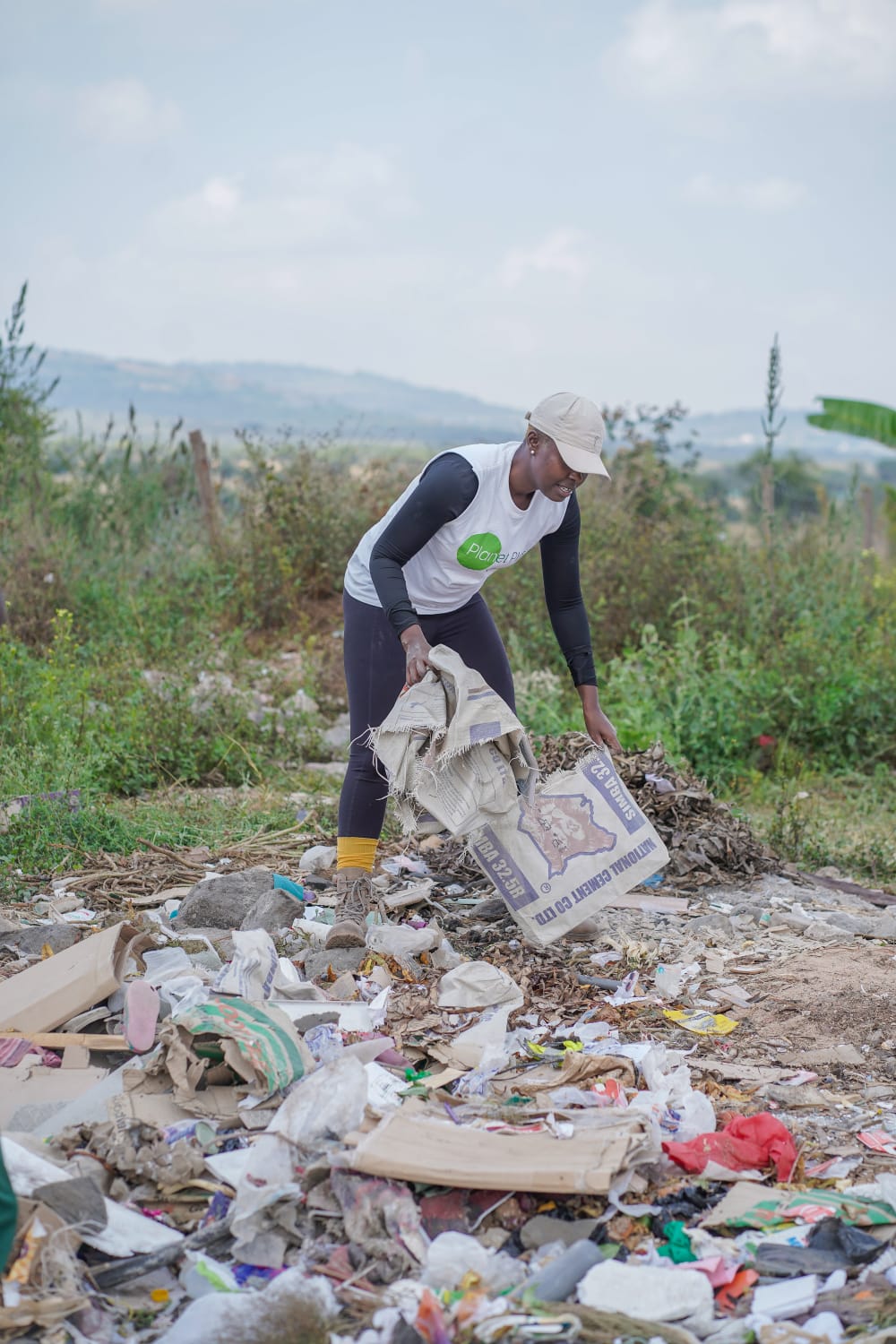
My dad later explained that the flood had been made worse by plastic waste blocking the river by the bridge. Something my dad would try to change whenever he found time. He would clear the waste dumped near our home and then stand guard, warding off anyone trying to dump there again. To him, keeping the space clean meant deterring rats that chewed our fingers at night as we slept on the floor. Clearing the dumpsites also meant that the water would flow freely whenever it rained, keeping our home dry a little longer.
Within a week, the floods subsided in our area (though they continued elsewhere in the country). NGOs, together with the area chief, began distributing relief. That was when we learnt that we had survived what came to be known as the El Niño floods of 1997 the biggest in Kenya’s history. With tails between our legs, we queued and scrambled for blankets, foodstuffs and clothing. For countless families, this was the first time in a week they could finally cater to their basic human needs.
I get asked a lot what drives me and sometimes I struggle to come up with a fitting answer. But I believe I am who I am today because of my experiences the ones I once blocked out because of the shame of living so humbly, and the trauma that comes from surviving life-threatening events.
Now, I choose to remember. To revisit those moments and acknowledge how my parents modelled courage, resilience, and responsibility in the face of crisis.
These are the experiences that inspire me and make me look at the world differently.